While it’s necessary to keep roadways and walkways safe all winter, the use of salt can cause damage to our precious landscape plants. As the snow melts come spring, the contaminated water soaks into the ground and is absorbed around the root zone.
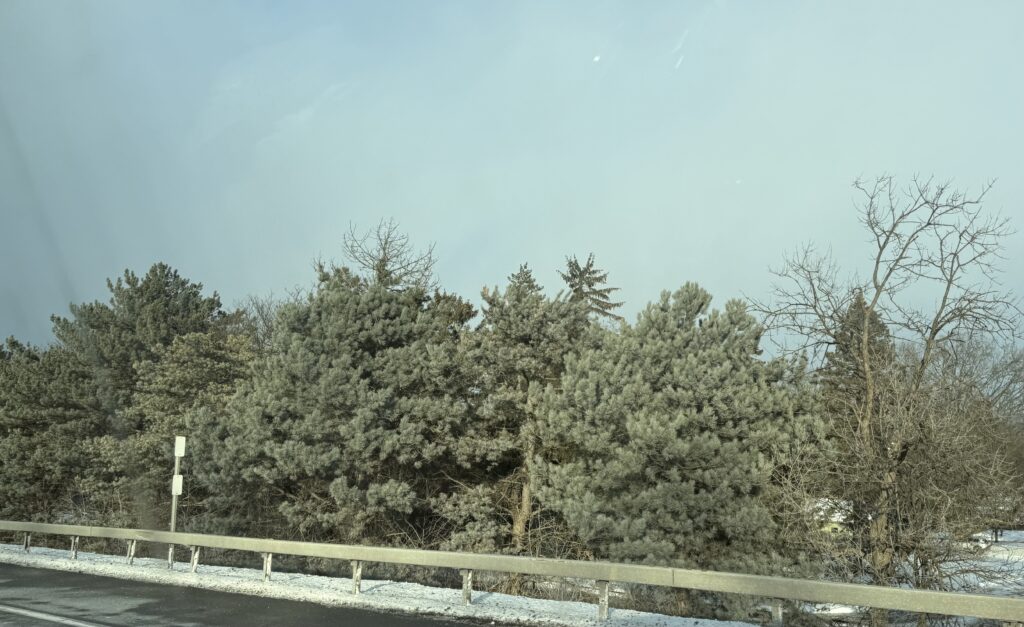
Salt damage often shows up as browning on the tips of leaves and needled evergreens. If severe enough, it can cause plant death. You’ll see on the roadside trees, like in the photo above, one side will look scorched where the salt hit and the other side may be unharmed.
You can experience salt damage even if you don’t live along a highway, salt leaching into the soil from your own driveway can be an issue.
So, how to avoid damage to our plants?
One of the simplest ways is to use water. When the ground thaws, give your plants a rinse and a deep soak to lower the salt concentration.
Burlap does help, but it can be unsightly. After all, having a nice view of your beautiful snow covered holly or rhododendron from the window is more lovely than a brown burlap blob.
Anti desiccant is a great option to protect many of your broadleaf evergreens. Its primarily used to prevent moisture loss, but has the added benefit of coating the leaves with a waxy substance that protects from salt damage as well. You should still soak the roots with water when the thaw comes.
We at Broccolo offer the anti-desiccant spray. The first application is done before winter hits, usually in November. We do a second application, usually in February, when we get a day or two of warmer temperatures and we’re able to apply the product.
Other ways of reducing salt damage is to use an alternative ice melt at your own home or business. There are products available that are less corrosive such as calcium magnesium acetate. Or use materials for traction such as kitty litter, sand or crushed stone.
If you have the luxury of planning ahead, you can select plants that have salt tolerance. Cornell has a list of native plants for difficult sites, many of which we carry at our garden center! Give us a call if you’d like to order for this spring or if you’d like to consult to start planning.
https://monroe.cce.cornell.edu/resources/shrubs-for-difficult-sites
Most importantly, stay safe but keep in mind that there are alternatives to the use of salt, or at least a balance exists between keeping ourselves safe as well as our plants