
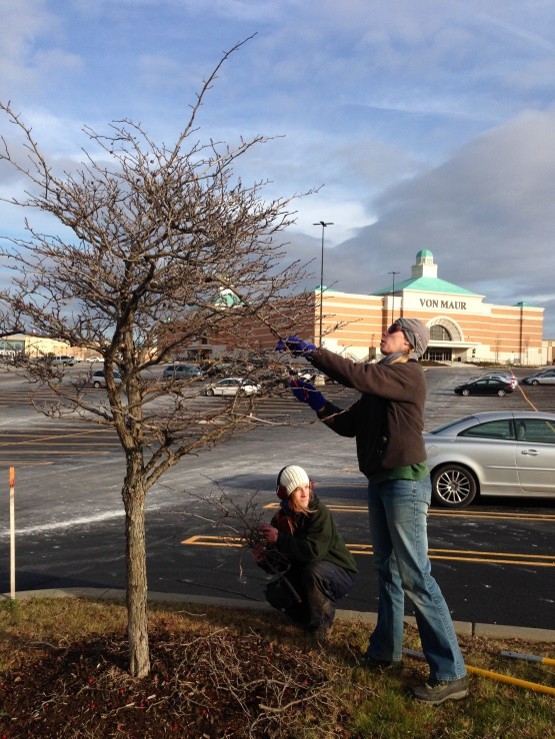
Thinning is the removal of crossing branches with a goal to increase air circulation. This helps reduce fungal issues or damage from rubbing branches
A common mistake that people make is cutting the young suckers at the base of multi-stem shrubs such as lilacs and viburnums.
To correct and revitalize the shrub it will require heading back, reduction of leggy branches
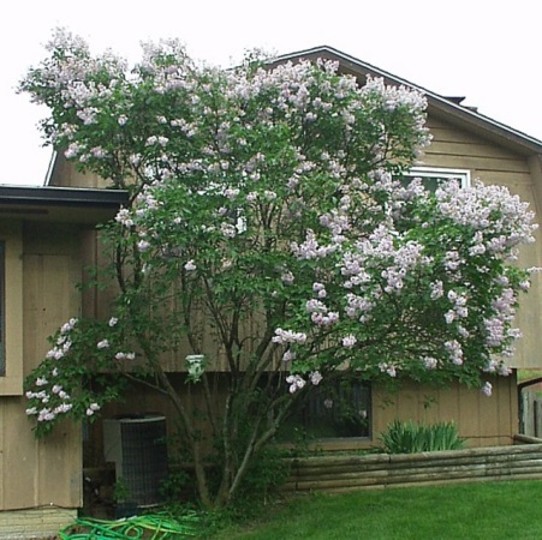
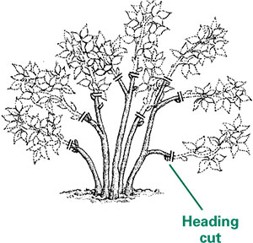
Here is an example of proper reduction:
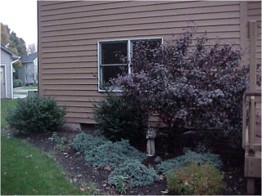
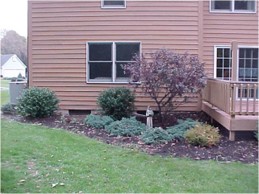
The old wood is prone to insects and mechanical damage from mowers or weed whips. Leaf debris collecting at the thick base can harbor small mammals that eat the bark of the shrubs and hold moisture encouraging fungi and rot at the base.
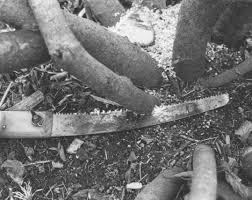
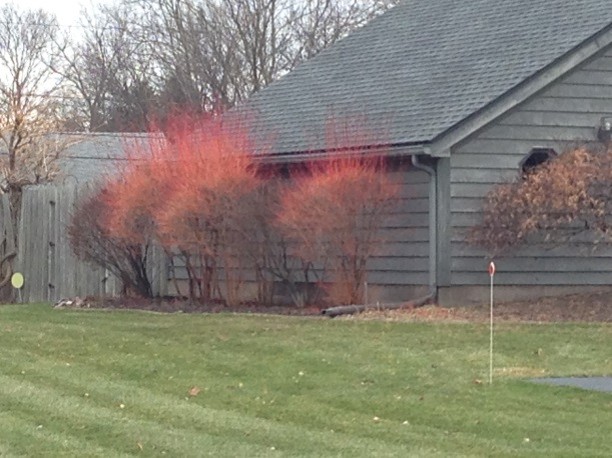
The colorful young shoots of red and yellow twig dogwoods will rejuvenate when older competing stems are removed.
Thinning is necessary to help plants recover from shearing.
The mowing of new growth for a symmetrical and unnatural tight shape becomes so dense that light and air cannot penetrate to the interior of the plant. This creates perfect conditions for fungus and increased insect populations.
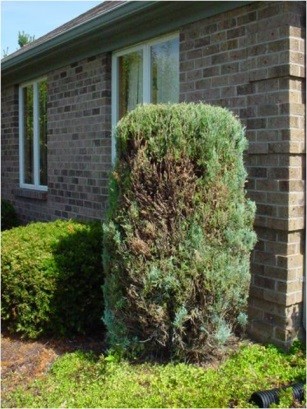
Shearing also causes the plant to produce abnormal knuckle- like growth that produces many unsightly erratic suckers
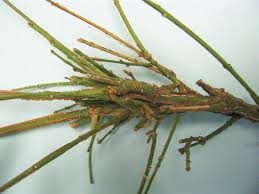
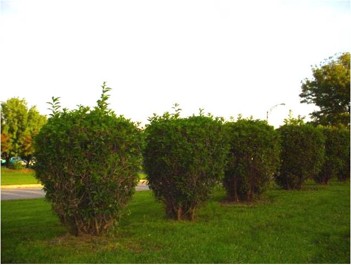
We get asked all the time, “What do you do in the winter?” Similar to trees and shrubs, our landscape services slow down but there are still things to do. Winter is the best time for thinning and reduction when your woody plants are dormant.
Fast growing deciduous shrubs should be thinned by 1/3 each year.
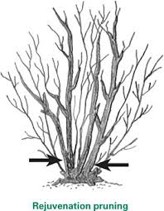
Removing the thicker, larger old shoots of multi-stem shrubs will encourage new shoots to sprout and promote a healthy vigorous plant.
Login to your account and click refer,
We will add $25 to your account when they sign up!
Refer
KEEP UP WITH US