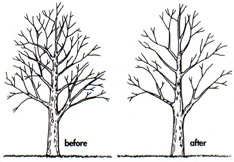

Weight reduction: the goal with this type of pruning is to shorten the length of heavy, overextended branches. By selectively removing branch material from the outer canopy, it decreases leverage, wind resistance, and the strain on the branch unions, preventing breakage.
The 3 D’s: this is the rule to remove dead, diseased or damaged wood from the canopy.
Structural Pruning: this type of pruning shapes a young tree to establish a strong, healthy structure, while pruning involves selectively removing branches to maintain that health and improve air circulation. These practices prevent storm damage, increase longevity, and make mature trees easier to manage.
It’s important to know that when a tree has a V shaped point of attachment rather than a U shape, it is more susceptible to breaking and storm damage. There are also several tree species that have weak or brittle wood due to their fast growing nature, which makes them prone to breakage as well. Bradford Pear, Poplars, Silver Maple, Box Elder, Willow.
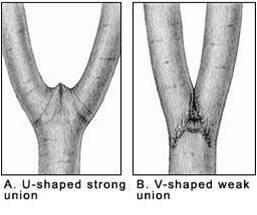
Another preventative measure to prevent splitting is to install cabling and bracing to support heavy/weak codominant stems.
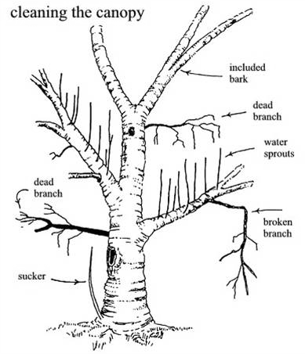
Crown cleaning: The selective removal of dead, dying, diseased or weak branches and watersprouts from a tree’s crown.
Crown thinning: The selective removal of branches to increase light penetration and air movement. This includes the removal of dead, dying, diseased, broken, weak, crossing/rubbing branches and watersprouts.
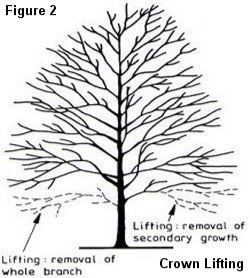
Crown uplifting: Removal of the lower branches to provide clearance under the tree. A height should be given on the contract, usually ‘mower clearance,’ ‘above head height,’ or car/truck clearance.
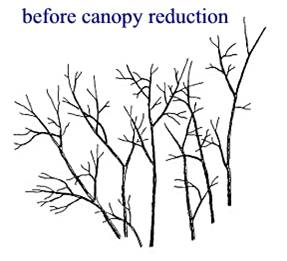
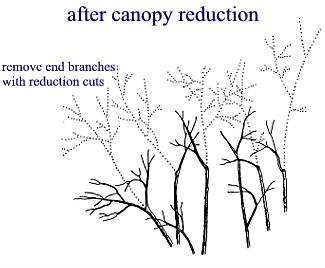
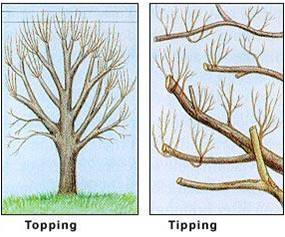
Crown reduction (crown shaping): Reduction of the height and/or spread of a tree. Take into consideration the ability of the species to sustain this type of pruning. Do not reduce the tree so much that you are topping it!! Reduction should be done by ‘drop-crotching’
Vista pruning: The selective thinning of framework limbs or specific areas of the crown to allow a view from a predetermined point.
Crown restoration/corrective pruning: Improvement of the structure, form and appearance of trees that have been severely headed (as in topped), vandalized or damaged in a storm. This will usually include removing any dead or broken limbs, limbs that have any decay, while selecting the healthiest growth to stay.
Specialty: Highly skilled, artistic pruning to reveal a specialized form. This includes weeping Japanese Maples, topiary, orchard style, espalier, and pollarding. Do not attempt these pruning styles unless you have been trained and given clearance to do so!
Login to your account and click refer,
We will add $25 to your account when they sign up!
Refer
KEEP UP WITH US